ここにQR画像用のimgタグが出力されます

It is an expressway running 20.8 km along Sagami Bay.

Click or Tap

Seisho Bypass

It is an expressway running 20.8 km along Sagami Bay.

ブイビエン通り ( Bui Vien Street ) ホーチミン ベトナム

Click or Tap

Bui Vien Street

A vibrant street in Vietnam's backpacker district. Lined with budget accommodations, restaurants, tour desks, and shops, it exudes a lively and exciting atmosphere.

銀座中央通り ( Ginza Chuo Street )

Click or Tap

Ginza Chuo Street

This road runs from Minato Ward, Tokyo, through Chuo Ward to Taito Ward, and forms part of National Route 15. It has been selected as one of the "100 Best Roads in Japan" and is also known as the street in Ginza that symbolizes Japan's modernization during the Meiji era.

In 1601—the year following Tokugawa Ieyasu's victory at the Battle of Sekigahara and prior to the formal establishment of the Tokugawa Shogunate—these routes were developed as major arteries for the transport of people, horses, and information between Edo and Kyoto, and between Edo and Osaka, with a formal *tenma* (post-horse) system put in place.

Click or Tap

Old Tokaido (Shinagawa-juku)

In 1601—the year following Tokugawa Ieyasu's victory at the Battle of Sekigahara and prior to the formal establishment of the Tokugawa Shogunate—these routes were developed as major arteries for the transport of people, horses, and information between Edo and Kyoto, and between Edo and Osaka, with a formal *tenma* (post-horse) system put in place.

Yamate-dori (Tokyo Metropolitan Road Route 317, Loop Road No. 6)

Click or Tap

Yamate-dori Avenue

Tokyo Metropolitan Road Route 317, Loop Road No. 6 (Yamate-dori Avenue), is a major local road (metropolitan road) that begins in Higashi-Shinagawa, Shinagawa Ward, Tokyo, and ends in Nakajuku, Itabashi Ward, Tokyo.
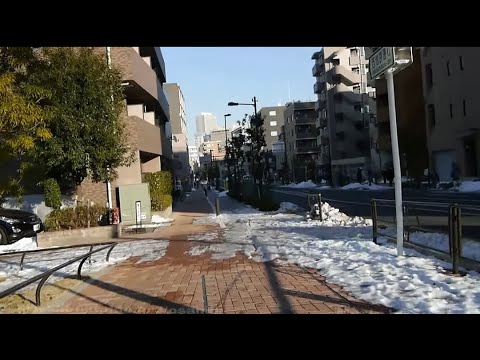
Nishi-Ikebukuro-dori (Auxiliary Route No. 172)

Click or Tap

Nishi-Ikebukuro-dori

An urban planning road located in Tokyo, extending approximately 9.1 km from Minami-Ikebukuro 1-chome, Toshima Ward, to Tanihara 1-chome, Nerima Ward. This road plays a crucial role in complementing the functions of radial arterial roads.

Kagurazaka-dori (Waseda-dori)

Click or Tap

Kagurazaka-dori Street

This is the main street running through the heart of the popular Kagurazaka area in Tokyo. Although its official name is Waseda-dori, Shinjuku Ward designates the section between the Kagurazaka-shita and Kagurazaka-ue intersections (within the ward) by the common name "Kagurazaka-dori."

Metropolitan Expressway (Nishikanda)

Click or Tap

Metropolitan Expressway

An expressway network crisscrossing central Tokyo, and one of the busiest expressways in Japan.

An important road running east-west through central Tokyo. It was formerly known as Taisho-dori. Spanning approximately 8 kilometers in total length, it begins at Ryogoku Bridge and extends to the large railway overpass at Shinjuku Station.

Click or Tap

Yasukuni-dori

An important road running east-west through central Tokyo. It was formerly known as Taisho-dori. Spanning approximately 8 kilometers in total length, it begins at Ryogoku Bridge and extends to the large railway overpass at Shinjuku Station.


A "road" is not merely a path to a destination; it is a vital element that reflects the lives, history, and culture of the people. Even a simple road walked casually while traveling holds the unique scenery and stories of the locale, revealing different facets depending on the walker's perspective. In cities, broad avenues cutting between skyscrapers create a vibrant urban atmosphere, while quiet residential roads support the daily lives of local communities. Meanwhile, in mountainous or coastal areas, roads winding along the natural terrain offer the charm of leisurely strolls amidst the changing scenery of the four seasons. In Japan, roads are classified under the Road Act, with a nationwide network comprising expressways, national highways, prefectural roads, and municipal roads. National highways serve as arterial routes connecting major cities, ports, and airports, underpinning logistics and the movement of people—acting as crucial infrastructure for the Japanese economy. Conversely, prefectural and municipal roads are closely tied to local life, serving as indispensable links for people traveling to schools, hospitals, and shopping districts. When traveling, it is common to use national highways for long-distance journeys while occasionally veering onto local roads to discover beautiful rural landscapes or traditional townscapes. Thus, while each type of road plays a distinct role, they work in concert to connect the entire country into a unified transportation network. Viewing roads from a tourism perspective reveals even more of their appeal. City streets lined with distinctive shops and restaurants allow visitors to experience local life simply by walking along them. In English, broad thoroughfares connecting cities are called "roads," whereas thoroughfares lined with buildings in residential or commercial areas are called "streets." Understanding this distinction is useful when traveling abroad, as it helps one grasp the layout of a city when looking at maps or signs. In Japan, too, places like Ginza Chuo-dori, Omotesando, and Kagurazaka-dori evoke the image of a "street," drawing many tourists who enjoy shopping and strolling through the area. On the other hand, arterial roads such as National Routes 1 and 4 strongly embody the role of "roads" connecting cities. Historic highways are also indispensable when discussing Japan's roads. These routes have served as historic transportation arteries—carrying people, goods, and culture—since before the Edo period; famous examples known nationwide include the Tokaido, Nakasendo, Koshu Kaido, and Nikko Kaido. Although modern road networks have since been developed, many of these old highways remain in use as local roads or tourist routes, preserving numerous sites that evoke the atmosphere of bygone days, such as post towns, cobblestone paths, signposts, and avenues of pine trees. Walking along them allows one to reflect on an era when travelers, merchants, and *daimyo* processions once passed by. Venturing into narrow alleyways reveals a tranquil pace of life distinct from that of the main thoroughfares. These alleys, winding between houses and shops, are intimately connected to the daily lives of local residents. Scenes featuring potted plants and seasonal flowers at doorsteps, small shrines and *Jizo* statues, and traditional wooden houses offer a sense of warmth quite different from that of major tourist attractions. The alleys found in Kyoto’s small lanes or Tokyo’s *shitamachi* (old downtown) districts possess a unique atmosphere born of their narrow confines, offering new discoveries with every step. These alleys serve as hubs for community interaction and are among the best places to experience the local lifestyle and culture firsthand. Looking globally, roads offer an even wider array of charms. America’s Route 66 is renowned as a historic highway traversing a vast continent, where many travelers enjoy the freedom of the open road. Italy’s Appian Way is a historic route dating back to ancient Rome, and sections of it can still be walked today. Spain’s Camino de Santiago (Way of St. James) is a unique pilgrimage route where the journey itself is the purpose; many people walk it as a way to reflect on their lives. Roads take on unique characteristics shaped by each country's nature and history—such as the straight stretches exceeding 100 kilometers found in Australia or the steep inclines for which New Zealand is known. Roads are far more than mere infrastructure for the safe passage of people and vehicles; they serve as a societal foundation that supports logistics, connects individuals, conveys culture and information, and fosters regional development. From ancient highways to modern expressways, while their forms have evolved over time, their fundamental role in supporting people's lives remains unchanged. For travelers, a road is not only a means of reaching a destination but also a stage for enjoying the journey itself. Even a road walked casually is imbued with the local history, culture, nature, and the lives of the people who inhabit the area. By taking the time to appreciate the unfolding scenery and the encounters along the way—rather than focusing solely on the destination—even a familiar path can transform into a special journey filled with new discoveries.


ここにQR画像用のimgタグが出力されます


Old Website


Old Website


Everyone's Album