At the Mitama Matsuri festival on July 16, 2026, Hiro Tsunoda performed a dedicatory concert at the Noh theater; the sounds of jazz and choral offerings filled the air, and the solemn music dedicated to the spirits of the war dead captivated the worshippers.

Click or Tap

July 16, 2026

Hiro Tsunoda held a dedicatory concert at the Noh theater; the sounds of jazz performances and choral offerings—solemn music dedicated to the spirits of the war dead—captivated the audience.

At the Mitama Matsuri festival on July 16, 2026, the Hosei University Cheering Squad performed a powerful dedicatory demonstration in front of the Shinmon Gate; with worshippers and alumni looking on, it was a special evening where tradition and prayer came together.

Click or Tap

July 16, 2026

The Hosei University Cheering Squad performed an impressive dedicatory demonstration in front of the shrine gate.

On July 16, 2026—the final day of the Mitama Matsuri at Yasukuni Shrine—the precincts were illuminated by approximately 30,000 votive lanterns, and ceremonial events such as the Aomori Nebuta and Bon Odori were held, creating an enchanting summer night where prayer and traditional culture harmoniously blended.

Click or Tap

July 16, 2026

On the final day of the Mitama Matsuri at Yasukuni Shrine, the shrine grounds were illuminated by approximately 30,000 votive lanterns, and dedicatory events—such as the Aomori Nebuta—were held.

At the Mitama Matsuri festival held at Yasukuni Shrine on July 15, 2026, the shrine grounds were illuminated by approximately 30,000 lanterns; the event featured spirited *mikoshi* (portable shrine) swaying, a gathering for traditional folk dancing, and various dedicatory performances, allowing many visitors to fully enjoy the atmosphere of a Japanese summer and traditional culture.

Click or Tap

July 15, 2026

The shrine grounds were illuminated by approximately 30,000 lanterns, and the festivities—featuring dynamic *mikoshi* (portable shrine) swinging, a gathering for traditional folk dancing, and various ritual offerings—allowed many visitors to fully enjoy the atmosphere of a Japanese summer and traditional culture.
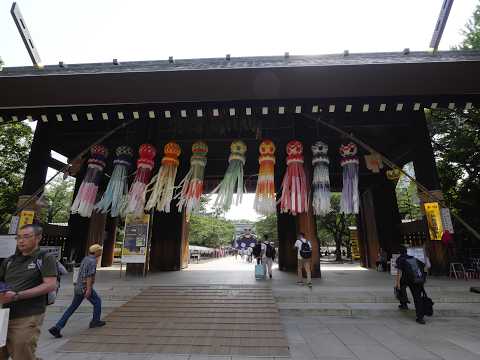
The Mitama Matsuri festival at Yasukuni Shrine on July 14, 2026, is a quintessential summer event; amidst the midsummer heat, the grounds are adorned with approximately 30,000 lanterns, Tanabata decorations, floral tribute exhibitions, and Ryukyu dance performances, allowing visitors to fully enjoy traditional culture and a serene atmosphere in anticipation of the evening festivities.

Click or Tap

July 14, 2026

Amidst the midsummer heat, the scene is brought to life by some 30,000 lanterns, Tanabata decorations, floral tribute exhibitions, and Ryukyu dance performances; it is a quintessential summer event where visitors can fully enjoy traditional culture and a sense of serene anticipation leading up to the evening festival.


The **79th Mitama Festival** was held at **Yasukuni Shrine** in Chiyoda City, Tokyo, from **July 13 to July 16, 2026**. Recognized as one of Tokyo's most iconic summer festivals, the event beautifully combined solemn remembrance with the vibrant atmosphere of a traditional Japanese summer celebration. Every evening, the shrine grounds were transformed by the warm glow of more than **30,000 lanterns**, creating an unforgettable landscape that attracted worshippers, photographers, tourists, and families from across Japan and around the world. The Mitama Festival was first established in **1947**, shortly after World War II. Inspired by Japan's traditional Obon season, the festival is dedicated to honoring the spirits enshrined at Yasukuni Shrine. Today, it continues to serve as an occasion for reflection while also introducing visitors to many aspects of Japan's rich cultural heritage. Although the festival is widely known for its spectacular lantern displays, it is equally appreciated for its traditional performances, artistic exhibitions, ceremonial events, and welcoming summer atmosphere. Visitors entering through the First Torii Gate immediately encountered rows of illuminated lanterns stretching toward the main sanctuary. Large paper lanterns lined the outer approach, while thousands of smaller dedication lanterns filled the inner shrine grounds with soft golden light. As daylight gradually faded, the contrast between the historic wooden shrine buildings and the glowing lanterns created one of the most photogenic night scenes in Tokyo. The peaceful atmosphere encouraged visitors to walk slowly through the grounds while appreciating both the beauty of the setting and the historical significance of the shrine. Weather conditions throughout the four-day festival reflected the peak of the Japanese summer. Tokyo experienced consistently hot and humid weather, with average daily temperatures around **29°C to 30°C**. Maximum temperatures reached approximately **34°C** each afternoon, while nighttime temperatures remained between **24°C and 26°C**. Relative humidity generally ranged from **72% to 75%**, producing the characteristic midsummer climate of Tokyo. Light southerly and southeasterly winds, averaging **2.4 to 3.5 meters per second**, provided occasional relief during the evening hours. Skies were mostly partly cloudy with periods of sunshine during the day, allowing the illuminated lanterns to become even more striking after sunset. Each evening, official religious ceremonies were conducted at the shrine beginning around 5:00 p.m. These services formed the spiritual heart of the festival and reflected its original purpose of remembrance. During the festival, visitors also had the rare opportunity to participate in the **Night Inner Garden Worship**, allowing access to an area of the shrine that is normally closed to the public. Walking through the softly illuminated sacred grounds offered a unique and memorable experience that is available only during the Mitama Festival. One of the festival's greatest attractions was the remarkable variety of traditional cultural performances presented over the four days. Visitors could enjoy **Bon Odori** dancing around the statue of Omura Masujiro, where local residents, families, and international visitors joined together in traditional Japanese folk dances. The welcoming atmosphere made participation easy even for first-time visitors, creating a joyful expression of community spirit beneath the glowing lanterns. The festival also featured the energetic **Mikoshi Swinging Ceremony**, during which participants carried and vigorously shook a portable shrine while proceeding toward the main sanctuary. Their synchronized movements, accompanied by spirited chants, demonstrated the strength and vitality of traditional Japanese festival customs. Equally impressive was the appearance of the **Aomori Nebuta**, presented by the Tokyo Nebuta Federation. Giant illuminated floats inspired by the famous Nebuta Festival in Aomori traveled along the shrine approach accompanied by taiko drums, flutes, and lively festival music. The dramatic combination of enormous illuminated floats and thousands of surrounding lanterns created one of the festival's most spectacular scenes. Throughout the shrine grounds, visitors could also admire colorful **Sendai Tanabata decorations**, a special exhibition of famous traditional lanterns from various regions of Japan, and an elegant flower exhibition presented by leading schools of Japanese ikebana. These displays demonstrated the diversity of Japanese regional culture while complementing the festival's atmosphere of remembrance and beauty. Modern cultural performances were also an important part of the program. The **Hosei University Cheer Squad**, together with its brass band and cheerleading team GENIES, presented a powerful dedication performance honoring former students who lost their lives in war. Their disciplined demonstrations, energetic music, and traditional university cheering techniques attracted large audiences and represented a unique blend of student tradition and memorial tribute. Another beloved annual event was the **Special Outdoor Dedication Concert** by renowned singer, drummer, and songwriter **Hiro Tsunoda (Tsunoda☆Hiro)**. Performing on the shrine's traditional Noh Stage, he and his band offered jazz and vocal performances dedicated to the spirits honored at Yasukuni Shrine. Songs including *Bird of Hope*, *Furusato*, *Umi Yukaba*, *Thank You*, and the internationally recognized *What a Wonderful World* moved many listeners. The performance emphasized gratitude, peace, and remembrance, with the artist bowing toward the shrine rather than the audience as a symbol of dedication. Unlike many traditional Japanese summer festivals, the 2026 Mitama Festival did not feature rows of food stalls. Instead, visitors enjoyed refreshments from carefully arranged **kitchen trucks** offering grilled foods, yakisoba, shaved ice, beverages, and other light meals. This layout created wider walking paths, allowing guests to comfortably appreciate both the illuminated scenery and the various performances. Alcohol parties within the shrine grounds were prohibited, helping preserve the respectful atmosphere appropriate to the festival. The festival attracted a remarkably diverse audience. Families with young children, elderly visitors, university students, photographers, international tourists, and local residents all shared the same peaceful environment. Many visitors wore colorful yukata, adding to the traditional summer scenery. Foreign tourists were particularly impressed by the illuminated shrine, the cultural performances, and the opportunity to experience authentic Japanese traditions in a respectful setting rather than a purely entertainment-oriented festival. The 79th Mitama Festival demonstrated how remembrance, history, religion, and cultural celebration can coexist in harmony. The glowing lanterns symbolized prayers for those who came before, while the music, dance, traditional arts, and community participation expressed hope for the future. Rather than simply being a summer event, the festival offered visitors a meaningful opportunity to experience Japan's cultural identity, historical memory, and seasonal beauty. For anyone visiting Tokyo in mid-July, the Mitama Festival at Yasukuni Shrine remains one of the city's most distinctive cultural experiences. Its unique combination of sacred tradition, magnificent lantern displays, regional performing arts, and warm summer atmosphere makes it an unforgettable destination where visitors can appreciate both the solemn history and the enduring cultural spirit of Japan.


日本語ページ


Everyone's Album